
 By
By 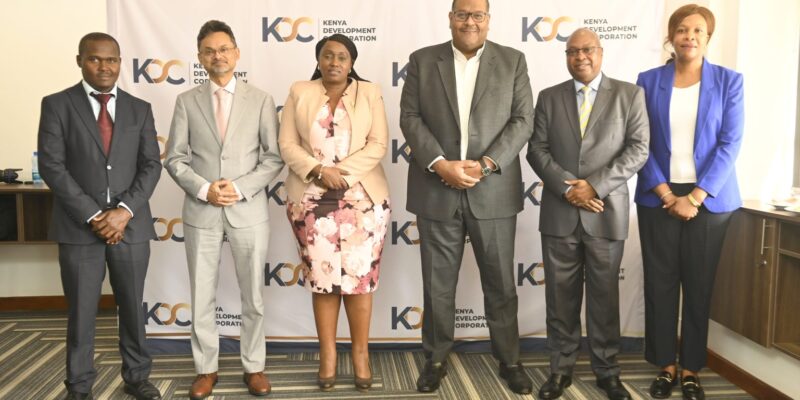
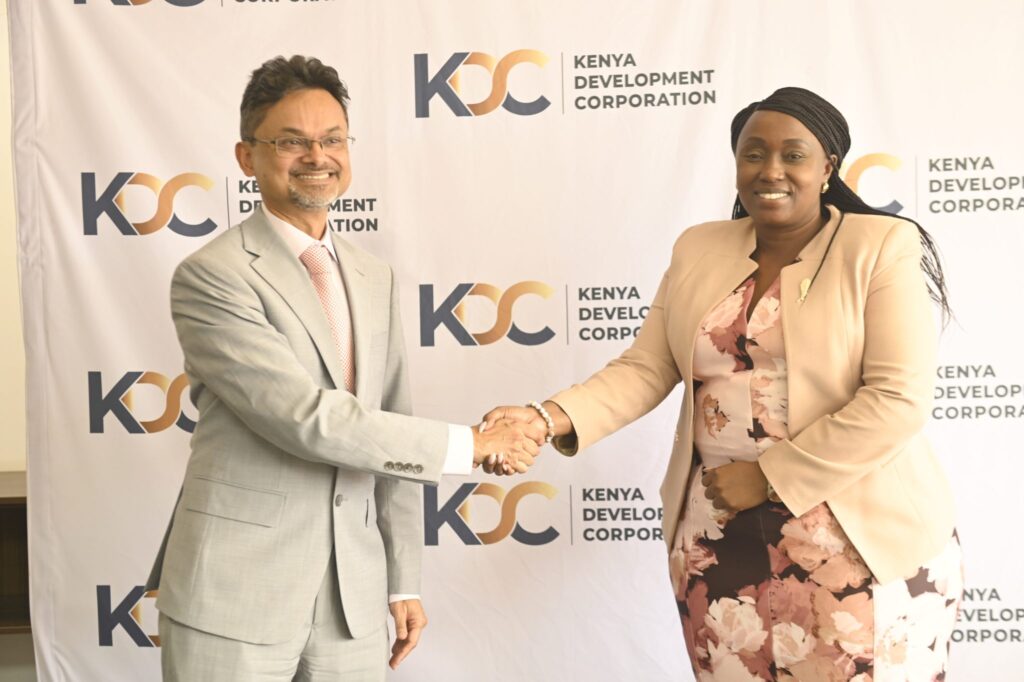
Kenya Development Corporation (KDC) has hosted senior World Bank officials for a high-level progress review of Component 3 of the Kenya Jobs and Economic Transformation (KJET) Project, which focuses on mobilizing private capital and strengthening climate resilience among small and medium-sized enterprises (SMEs), alongside the Supporting Access to Finance and Enterprise Recovery (SAFER) Project.
KJET aims to increase private sector investment, improve market access, and expand sustainable finance to create and enhance jobs, while advancing Kenya’s green growth and climate resilience agenda.
The engagement reviewed progress on the establishment of the Green Investment Fund (GIF) and provided a platform for strategic dialogue between KDC and the World Bank on implementation readiness, governance arrangements, and scaling potential.
During the discussions, the World Bank acknowledged the Government of Kenya’s leadership, with KDC as the implementing institution, in advancing a blended finance platform designed to de-risk private investment and expand access to patient capital for SMEs adopting climate-aligned and sustainable technologies.
The Bank reaffirmed its support for the initiative through KJET, underscoring the importance of combining public resources, technical assistance, and private capital to achieve impact at scale.
Significant progress has been made in operationalizing the Green Investment Fund, with the World Bank channeling USD 43 million to KDC.
The fund will support investments in priority green growth sectors, including electric mobility and transport, energy-efficient and green buildings, sustainable agriculture, and waste management solutions.
These sectors were identified as offering strong near- and medium-term deployment potential, supported by favorable policy direction, growing market demand, and improving enabling conditions.
Discussions also emphasized the importance of strong governance and fund manager independence. The World Bank noted that the ongoing competitive selection of an independent fund manager, now at an advanced stage, is a critical milestone in safeguarding commercial discipline, managing conflicts of interest, and ensuring alignment with the fund’s development and financial objectives.
Beyond KJET, the engagement reviewed progress under the SAFER Project, which continues to deliver socio-economic impact across the MSME sector. To date, SAFER has supported more than 37,000 enterprises, 38 percent of them women-owned, and facilitated the creation of over 25,000 jobs.
Through the programme, SACCOs have rolled out tailored SME financing products, including a digital lending window designed to reach micro-businesses, accelerate loan approvals, and significantly expand access to finance.
KDC Director General Norah Ratemo said the two programmes are delivering tangible outcomes by crowding in private capital and strengthening financial intermediaries.
“The progress made on the Green Investment Fund marks a critical step towards scaling climate-smart investments that create jobs, enhance resilience, and support sustainable enterprise growth,” she said.
The partnership has also strengthened environmental, social, and governance (ESG) integration across SME financing. Under both KJET and SAFER, KDC has enhanced its Environmental and Social Management Systems to ensure compliance with national regulations and international best practice.
Participating financial institutions, including SACCOs, have been supported to embed ESG screening, risk management, and reporting into their lending processes, promoting responsible financing while safeguarding communities, livelihoods, and the environment.
World Bank Regional Director Hassan Zaman said the progress under KJET demonstrates the potential of well-structured blended finance platforms to unlock private investment and accelerate climate-aligned growth.
“The Green Investment Fund framework has strong potential as a replicable model capable of meeting SMEs’ demand for patient capital while advancing climate adaptation, mitigation, and private sector participation,” he said.
Looking ahead, discussions also explored opportunities for additional financing to scale SAFER interventions and expand support for medium-sized enterprises.
Strong demand from SACCOs and other financial institutions, alongside the growing role of digital and tailored financial products, was identified as a key opportunity to deepen financial inclusion and support firm growth along the value chain.
The continued collaboration between the Government of Kenya, KDC, and the World Bank aims to ensure that Kenya’s MSMEs have access to the finance, tools, and support needed to drive inclusive growth, create jobs, and build resilience in a changing climate.





Comments