
 By
By 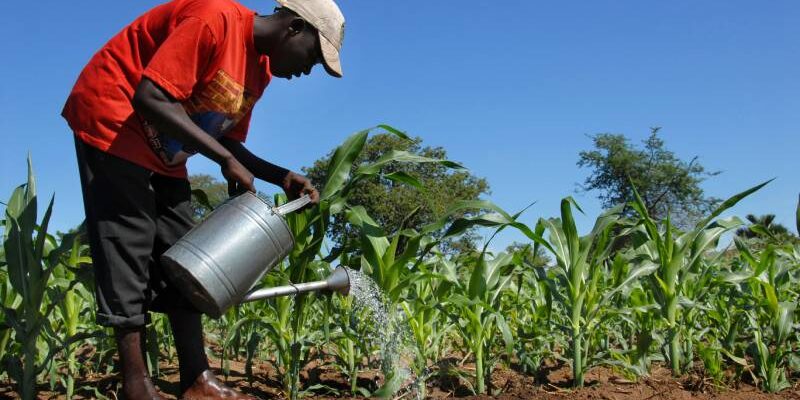
Across much of the Arab world, irrigation has become the backbone of agricultural production—supporting food security, livelihoods and employment for millions of smallholder farmers.
As climate change accelerates, this dependence is set to deepen. The IPCC’s Sixth Assessment Report warns of worsening drought and aridity across the region, punctuated by episodes of intense, destructive rainfall. The need for reliable, resilient water systems has never been more urgent.
For decades, many countries invested heavily in large-scale irrigation schemes. Yet these systems often struggle with poor sustainability, inadequate maintenance, and limited government capacity to modernize ageing infrastructure. In contrast, small-scale irrigation has repeatedly proven more efficient and adaptable—provided it is designed from the outset to avoid burdensome technical or managerial demands.
Successful small-scale irrigation rests on climate-smart, resilient and financially viable infrastructure. Central to this is the efficient use of water and the integration of renewable energy solutions. Such systems can be tailored to a variety of farming models, from individual producers to organized groups including cooperatives, contract farming networks and agro-input aggregators. Each model involves distinct governance, management and payment mechanisms, making it critical to choose the option that best fits local conditions.
Innovations Supporting Small-Scale Farmers
IFAD has supported a wide range of interventions aimed at improving water availability, storage and efficiency—while also incorporating renewable energy into both new and ongoing projects.
1. Water harvesting
Collecting water from rooftops, catchments, roads and compacted surfaces can serve as a valuable supplemental or primary water source. Research from Burundi, India, Tanzania and Uganda shows that water harvesting can boost agricultural output by 60–100 per cent.
In Lebanon, an IFAD-funded initiative responded to deteriorating land and water resources by terracing steep slopes, conserving soils, planting high-value fruit trees and capturing runoff in hillside ponds for use during dry months. The results were transformative: farmers curbed land degradation, raised incomes and generated new employment opportunities.
2. Water conveyance and application
Globally, more than 95 per cent of irrigated land still relies on open earthen canals and surface irrigation—methods that lose vast quantities of water. Replacing these with piped conveyance systems and modern application methods such as drip and sprinklers can dramatically cut waste.
In Egypt, the IFAD-supported OFIDO project installed an underground low-pressure piped network to replace traditional earthen canals. Water-use efficiency rose by at least 20 per cent, distribution became more equitable, and both labour and water losses fell. Farmer-led user associations made operations and maintenance more effective, while the shift from diesel to electric pumping cut emissions and reduced costs.
Complementary research in Ethiopia’s Amhara region, backed by USAID, confirmed similar benefits. A package that combined drip irrigation, solar power and conservation agriculture reduced water use by 30 per cent, increased labour productivity up to tenfold, boosted yields by 15–30 per cent, and raised annual farm income by about US$2,700 per hectare.
3. Financing small-scale irrigation
Despite clear evidence of impact, globally there remains an annual financing gap of roughly US$80 billion for small-scale irrigation. Innovative financing models are therefore essential.
Egypt’s OFIDO project introduced a pre-financing system with a long-term cost-recovery mechanism, allowing farmers to repay infrastructure investments over 20 years. Government subsidies were embedded in the removal of cost inflation and interest—effectively lowering the real cost of the interventions. This hybrid financing approach encouraged farmers to adopt water-saving, climate-friendly technologies while ensuring long-term sustainability.
With well-structured farmer organizations, operation and maintenance costs can be fully covered locally. Irrigation programmes must also establish exit strategies and supportive legislation to ensure lasting ownership, financing and system functionality.
4. Building partnerships
Strong partnerships are vital for scaling sustainable irrigation. Collaboration between governments, donors, private-sector suppliers and local communities can unlock new funding sources and accelerate the adoption of diverse technological solutions.
In particular, integrating private-sector actors into service delivery—especially for micro-irrigation and renewable energy—ensures farmers access cost-effective innovations. Piloting new technologies before scaling helps reduce risk while allowing suppliers to build trust and track record.
5. Climate-smart solutions for a changing region
As global leaders gather at COP26, one of the central challenges is safeguarding small-scale farmers from the pressures of a fast-changing climate. For farmers across the Arab world—already grappling with water scarcity, land degradation and rising climate extremes—immediate action is essential.
Sustainable, climate-smart irrigation systems that conserve water, reduce environmental impacts and improve productivity must become a priority. With the right financing tools, partnerships and technologies, small-scale irrigation can help secure food systems and protect livelihoods across the region.


Graeci lobortis explicari ex nam. Ne odio oratio maiorum pro, vim in vulputate rationibus dissentiet. Porro admodum quo ei, no laudem tacimates mea. Vim cu ubique intellegam, no sea dico atqui postulant, no impetus tibique mei.
Odio aeque molestie sed ea, vix id tation gloriatur. Atqui mnesarchum mea eu. Ferri dolorum ea vim. At his tale primis aliquam.