
 By
By 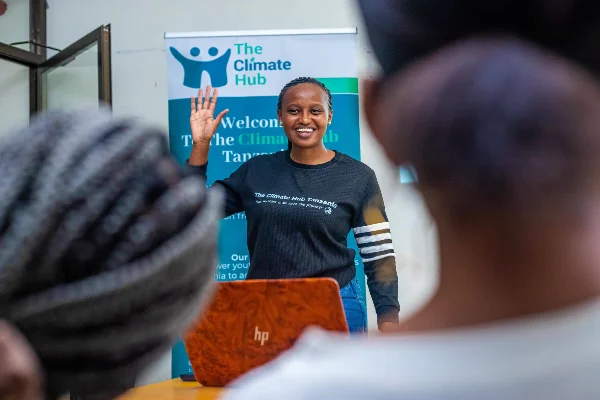
Where policy lags, youth and women are stepping in to lead Tanzania’s climate response. According to Climate KIC, grassroots organisations are filling the gaps by empowering young people and women to drive innovation, advocacy, and resilience in the face of mounting climate risks.
Breaking Barriers
“Before YAWE’s training, I never imagined someone like me could speak at a village assembly,” says 26-year-old Edina Evodius from Shinyanga. “Now, I sit at the table. They listen.”
Initially dismissed for being too young and for daring to lead as a woman, Evodius earned respect through persistence, community engagement, and tangible results.
Today she organises tree-planting campaigns, delivers environmental education, and advocates for youth-inclusive policies. Her journey reflects a broader shift across Tanzania, where women and youth are reshaping climate leadership despite systemic barriers.
Why Their Voices Matter
Seventy-seven per cent of Tanzania’s population is under the age of 35. Yet, according to the Notre Dame Global Adaptation Initiative, the country ranks among the most climate-vulnerable in the world—147th out of 187 nations.
With droughts and floods threatening agriculture, the backbone of Tanzania’s economy, urgent adaptation is needed.
Tanzania’s National Climate Change Strategy (2021–2026) recognises these challenges but offers little clarity on how youth and women will be integrated into solutions.
This omission is striking, given that women produce 80% of food globally, perform three times more unpaid care work than men, and are disproportionately displaced by climate disasters.
Ignoring gender and youth perspectives risks entrenching inequalities rather than solving them.
NGOs Filling the Gaps
According to Climate KIC, Tanzanian NGOs are stepping up where policies fall short among the organisations being Environmental Conservation Community of Tanzania (ECCT).
“With the majority of our population under 30, everything we do at ECCT is grounded in the understanding that youth are not a side note, they are the centre of our climate future,” said Lucky Michael, founder of ACCT.
Through initiatives like EcoWear, young women transform textile waste into sustainable fashion, combining advocacy with entrepreneurship. ECCT’s “She Leads Green” programme has seen alumni turn rooftops into urban gardens and launch waste management ventures tailored to community needs.
Laurel Kivuyo, co-founder of Climate Hub Tanzania, also highlights the importance of inclusive action. Raised in a Maasai community, she says: “When we launched Climate Hub Tanzania in 2021, we identified a critical gap—very few spaces meaningfully centred youth and women in climate leadership.”
The organisation combines traditional knowledge with modern climate strategies. Its literacy programmes train young leaders like Naomi Koinase, who now heads the Omom Maasai Community Foundation, blending indigenous knowledge with conservation to inspire Maasai girls to lead on climate issues.
Similarly, YAWE (Youth and Women Emancipation) tackles the “double disadvantage” faced by young women. Executive Director Vicent Laurent told Climate KIC: “We challenge restrictive gender norms while expanding access to opportunities.”
YAWE equips young people with climate knowledge, entrepreneurial skills, and governance training, enabling them to take part in resource management committees once closed to youth voices.


Comments